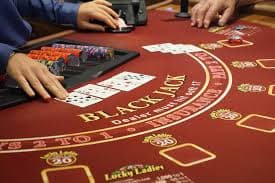
Master blackjack fundamentals with this complete guide designed for Bangladesh users. Learn game rules, basic strategy, card counting myths, mobile play tips, and responsible gaming practices. This guide is exclusively for adults aged 18 and above.
Blackjack is a popular card game where players compete against the dealer to achieve a hand value as close to 21 as possible without exceeding it. The game combines elements of chance and decision-making, making it appealing to players throughout Bangladesh who enjoy strategic entertainment.
At Jeetwen, blackjack is available through mobile browsers on Android devices and desktop computers. The game loads directly without requiring app downloads, providing convenient access for users in Dhaka, Chattogram, Sylhet, and other cities across the country.
Unlike pure chance games, blackjack involves player decisions that affect outcomes. Choosing when to hit, stand, double down, or split requires understanding basic strategy principles. However, the house edge ensures that casinos maintain a mathematical advantage over time.
This guide covers everything Bangladesh players need to know about blackjack, from fundamental rules to advanced concepts. Remember that blackjack is entertainment for adults aged 18 and above, and responsible gaming practices are essential.
Essential rules every player must understand
Number cards (2-10) are worth their face value. Face cards (Jack, Queen, King) are worth 10 points. Aces can be worth either 1 or 11 points, whichever benefits your hand more. Understanding card values is fundamental to playing blackjack correctly.
The goal is to beat the dealer by having a hand value closer to 21 without going over. If your hand exceeds 21, you bust and lose immediately. If the dealer busts, all remaining players win. Ties result in a push where your bet is returned.
A natural blackjack occurs when your first two cards total 21 (an Ace plus a 10-value card). This typically pays 3:2, meaning a 100 taka bet wins 150 taka. Natural blackjack beats all other hands except a dealer's natural blackjack, which results in a push.
Dealers must follow fixed rules with no decision-making flexibility. Typically, dealers must hit on 16 or less and stand on 17 or more. Some variations require dealers to hit on soft 17 (a hand containing an Ace counted as 11). These rules affect the house edge.
Players can hit (take another card), stand (keep current hand), double down (double bet and take one card), or split (separate matching cards into two hands). Each action has strategic implications based on your hand and the dealer's visible card.
When the dealer shows an Ace, players can place an insurance bet equal to half their original wager. Insurance pays 2:1 if the dealer has blackjack. However, insurance is generally considered a poor bet mathematically and should be avoided by most players.
Optimal decisions based on mathematical probability
Basic strategy is a mathematically derived set of rules that tells you the optimal action for every possible hand combination. Following basic strategy minimizes the house edge to approximately 0.5% in favorable rule variations, though the house still maintains an advantage.
Basic strategy charts show what action to take based on your hand total and the dealer's upcard. These charts are created through computer simulations of millions of hands, identifying the statistically best decision for each scenario.
Learning basic strategy requires memorization and practice. Many players keep strategy charts handy while playing online, which is perfectly acceptable at Jeetwen. Over time, frequent players internalize these decisions and can make them automatically.
Important note: Basic strategy reduces the house edge but does not eliminate it. You will still lose money over time on average. Basic strategy simply ensures you lose less than you would making random decisions.
Hard hands are hands without an Ace or where the Ace must be counted as 1 to avoid busting. Strategy for hard hands depends heavily on the dealer's upcard.
Always hit on 8 or less. Your hand is too weak to stand, and you cannot bust by taking one card.
Always stand on 17 or more. The risk of busting outweighs the potential benefit of improving your hand.
Hit on 12-16 when dealer shows 7 or higher. The dealer likely has a strong hand, so you need to improve yours despite bust risk.
Stand on 12-16 when dealer shows 2-6. The dealer has a higher chance of busting, so you should avoid taking unnecessary risks.
Double down on 11 against dealer 2-10. You have a strong chance of making a good hand with one more card.
Soft hands contain an Ace counted as 11. These hands are more flexible because you cannot bust by taking one card, as the Ace can revert to counting as 1 if needed.
Always hit soft 17 or less. You cannot bust, and there is significant potential to improve your hand.
Stand on soft 19 or more. These are strong hands that rarely benefit from additional cards.
Double down on soft 13-18 against dealer 5-6. The dealer is in a weak position, and you have good improvement potential.
Hit soft 18 against dealer 9, 10, or Ace. Your hand is not strong enough against these powerful dealer upcards.
Soft hands provide more aggressive playing opportunities because of their flexibility. Take advantage of doubling opportunities when the dealer shows weak cards.
When dealt two cards of the same value, you can split them into separate hands by placing an additional bet equal to your original wager. Each hand then plays independently.
Always split Aces and 8s. Splitting Aces gives you two chances at blackjack. Splitting 8s turns a weak 16 into two potentially strong hands.
Never split 10s or 5s. A pair of 10s gives you 20, which is already excellent. A pair of 5s totals 10, which is better played as a double down opportunity.
Split 2s, 3s, 6s, 7s, and 9s based on dealer upcard. Generally split these against dealer weak cards (2-6 or 2-7 depending on the pair) and hit or stand against stronger dealer cards.
After splitting, most casinos allow you to double down on the resulting hands if appropriate. However, splitting Aces typically allows only one additional card per hand with no further actions permitted.
The house edge represents the casino's mathematical advantage over players. In blackjack with favorable rules and perfect basic strategy, the house edge can be as low as 0.5%. However, rule variations and player mistakes increase this edge.
Factors affecting house edge include: number of decks used (fewer is better for players), dealer hitting or standing on soft 17 (standing is better for players), blackjack payout ratio (3:2 is better than 6:5), and availability of surrender options.
Even with optimal play, the house edge means you will lose money over time on average. A 0.5% house edge means you can expect to lose approximately 5 taka for every 1000 taka wagered over the long term. Short-term results vary significantly, but the mathematical expectation remains negative.
Understanding the house edge helps set realistic expectations. Blackjack should be viewed as paid entertainment, not as a way to make money. Budget accordingly and never wager more than you can afford to lose.
Understanding what card counting can and cannot do
Card counting is a technique where players track the ratio of high cards to low cards remaining in the deck. When more high cards remain, the player has a slight advantage and can increase bet sizes accordingly.
The most common system is the Hi-Lo count, where cards 2-6 are assigned +1, cards 7-9 are assigned 0, and cards 10-Ace are assigned -1. Players maintain a running count and adjust for the number of decks remaining to calculate the true count.
Card counting does not involve memorizing every card played. It is a simple addition and subtraction system that tracks overall deck composition. However, it requires concentration, practice, and discipline to execute correctly.
Even perfect card counting only gives players a small advantage, typically 1-2% in favorable conditions. This advantage requires large bankrolls and many hours of play to realize, making it impractical for casual players.
Online blackjack at Jeetwen and similar platforms uses continuous shuffle machines or reshuffles after every hand. This means the deck composition resets constantly, eliminating any advantage from tracking cards.
Even in live dealer blackjack, penetration (how deep into the shoe the dealer goes before reshuffling) is typically shallow, reducing counting effectiveness. Casinos implement these measures specifically to prevent card counting advantages.
Players who claim to count cards online are either mistaken about how online blackjack works or are attempting to mislead others. Focus on learning basic strategy instead, which provides genuine value in all blackjack formats.
Card counting is not illegal, but casinos can refuse service to players they suspect of counting. Online platforms make this issue irrelevant by using shuffle procedures that eliminate counting effectiveness entirely.
Optimizing your mobile gaming experience
Jeetwen blackjack works on Android smartphones and tablets commonly used throughout Bangladesh. The game runs in mobile browsers without requiring app downloads, saving device storage space and simplifying access.
Most modern Android devices handle blackjack smoothly. The game is less resource-intensive than video slots, so even older devices should perform adequately. Ensure your browser is updated for optimal performance and security.
Screen size affects comfort but not functionality. Larger screens provide easier viewing of cards and betting options, while smaller screens remain perfectly usable with touch-optimized interfaces that scale appropriately.
Stable internet connections ensure smooth gameplay. 3G connections work adequately for blackjack, though 4G provides better performance with faster loading and more responsive controls.
Blackjack uses less data than video slots because it involves static card images rather than animated graphics. However, live dealer blackjack consumes significantly more data due to video streaming requirements.
Avoid playing during periods of poor connectivity. Interrupted connections can cause delays in card dealing or bet processing. If you experience connection issues, refresh the game and verify your balance before continuing.
Mobile blackjack uses touch-optimized interfaces with clearly labeled buttons for hit, stand, double, and split actions. Buttons are sized appropriately for finger taps, reducing accidental presses during gameplay.
The betting interface allows easy chip selection and bet placement. Most games include undo buttons to correct accidental bets before dealing begins. Familiarize yourself with the interface layout before playing with real money.
Landscape orientation often provides a better view of the table layout and makes buttons more accessible. Experiment with both portrait and landscape modes to determine your preference for comfortable extended play sessions.
Blackjack consumes less battery than graphics-intensive games, but extended sessions still drain power. Reduce screen brightness and close unnecessary background apps to extend battery life during play.
Consider playing while your device charges if you plan longer sessions. Avoid letting your battery drain completely, as this can interrupt gameplay and potentially cause issues with recording hand results or balance updates.
Disable sound effects to conserve battery if needed. Audio features enhance atmosphere but are not essential for gameplay. Most blackjack games function identically with sound muted.
Essential practices for safe entertainment
Set a strict entertainment budget before playing blackjack. This budget should consist only of disposable income that you can afford to lose without affecting essential expenses like rent, food, utilities, or family needs.
Divide your budget into session bankrolls. For example, if your weekly budget is 2000 taka, you might allocate 400 taka per session across five sessions. Stop playing immediately when you reach your session limit, regardless of whether you are winning or losing.
Never borrow money to play blackjack. Never use credit cards or loans for entertainment purposes. These practices lead to financial problems and indicate problematic gaming behavior requiring immediate intervention.
Track your spending carefully. Keep records of deposits, wins, and losses. If you notice spending increasing beyond comfortable levels, reduce your play frequency or take an extended break from blackjack.
Establish time limits for blackjack sessions. Decide in advance how long you will play, whether 30 minutes, one hour, or another duration. Set alarms or timers to remind you when your time expires.
Take regular breaks during longer sessions. Stand up, stretch, look away from the screen, and engage in other activities. Continuous play without breaks can lead to poor decision-making and loss of perspective on spending.
Never let blackjack interfere with work, family responsibilities, or sleep. If you find yourself sacrificing important activities to play, this indicates problematic behavior requiring immediate attention and possibly professional help.
Balance gaming with other entertainment options. Blackjack should represent one of many leisure activities, not your primary or only form of entertainment. Maintain diverse hobbies and social connections outside of gaming.
Never chase losses. If you lose your budgeted amount, stop playing immediately. Trying to recover losses by continuing to play or increasing bet sizes almost always worsens the situation and leads to larger losses.
Do not increase bets after losses. Progressive betting systems like Martingale do not overcome the house edge. They simply risk larger amounts to recover small losses, often resulting in catastrophic losses when losing streaks occur.
Avoid playing while intoxicated or emotionally distressed. Impaired judgment leads to poor decisions, deviation from basic strategy, excessive spending, and regrettable actions. Only play when you are calm and clear-headed.
Do not view blackjack as income. Even with perfect basic strategy, the house edge ensures long-term losses for players. Never view blackjack as a way to make money or solve financial problems.
Recognize warning signs of problem gaming. These include playing with money you cannot afford to lose, lying about gaming activity, neglecting responsibilities, or feeling unable to stop. Seek help immediately if you notice these patterns.
Different blackjack formats and their characteristics
Classic blackjack follows standard rules with the dealer standing on all 17s. This variation typically uses multiple decks and offers the most straightforward gameplay experience for Bangladesh players new to the game.
The game allows doubling on any two cards and splitting pairs according to standard rules. Blackjack pays 3:2, providing fair payouts for natural blackjacks. This variation serves as an excellent starting point for learning basic strategy.
Classic blackjack maintains a reasonable house edge when played with proper strategy. Focus on mastering basic strategy in this format before exploring more complex variations with additional rules or side bets.
European blackjack differs from classic versions in that the dealer receives only one card initially and does not check for blackjack until after players complete their hands. This rule variation affects strategy for doubling and splitting.
If the dealer's second card gives them blackjack, players lose all bets including doubles and splits. This increases the house edge slightly compared to classic blackjack where dealers check for blackjack immediately.
European blackjack often restricts doubling to hands totaling 9, 10, or 11. These rule variations require slight strategy adjustments compared to classic blackjack, so review the specific rules before playing.
Live dealer blackjack streams real dealers from studios, providing a more immersive experience. Players make decisions using on-screen controls while watching actual cards being dealt in real-time.
This format requires stronger internet connections due to video streaming. 4G or WiFi connections work best for smooth video quality. Live dealer games also play at a slower pace than standard online blackjack due to real-time dealing.
Live dealer blackjack appeals to players who prefer the atmosphere of real dealers and physical cards. However, the core strategy remains identical to standard online blackjack, so the same basic strategy principles apply.
Some blackjack variations offer side bets like Perfect Pairs or 21+3, which pay based on your initial cards forming specific combinations. These side bets typically have much higher house edges than the main blackjack game.
While side bets can add excitement and offer larger payouts, they are generally poor value mathematically. The house edge on side bets often exceeds 5-10%, making them expensive entertainment compared to the main game.
If you choose to place side bets, do so sparingly and only with money you have specifically budgeted for this purpose. Never let side bets consume a significant portion of your bankroll, as they accelerate losses over time.
Start with lower bet sizes while learning basic strategy. This extends your playing time and allows you to practice decision-making without risking large amounts. Gradually increase stakes only after you consistently make correct strategy decisions.
Use strategy charts while playing online. There is no shame in referencing charts, and doing so ensures you make optimal decisions. Over time, you will memorize common situations and need the chart less frequently.
Focus on the entertainment value of each session rather than winning or losing. Approach blackjack as a paid leisure activity similar to watching movies or dining out. The cost of playing is the price of entertainment.
Celebrate wins without expecting them to continue. Enjoy successful hands and winning sessions, but understand that variance means losses will occur. Never view wins as validation to increase stakes or play beyond your budget.
Connect with other entertainment options at Jeetwen. If blackjack stops being enjoyable, explore other games or take a break entirely. Never feel obligated to continue playing when you are not having fun.
Protecting your information while playing blackjack
Always log out of your Jeetwen account after finishing your blackjack session, especially when using shared or public devices. This prevents unauthorized access to your account and protects your balance from theft.
Use strong, unique passwords that combine letters, numbers, and symbols. Never share your password with anyone, including friends or family members. Change your password regularly and immediately if you suspect unauthorized access.
Enable any available security features offered by Jeetwen. Two-factor authentication, if available, adds an extra layer of protection to your account by requiring a second verification step during login.
Be cautious about where you play blackjack. Avoid playing in public spaces where others can view your screen and potentially see sensitive account information, balance details, or betting patterns.
Use secure internet connections. Public WiFi networks pose security risks that could compromise your account. When possible, use your mobile data connection or trusted private networks for accessing your Jeetwen account.
Review the Privacy Policy to understand how Jeetwen handles your personal information. For additional security guidance, visit the Safety Help Center.
Apply the strategies and principles covered in this guide to enjoy blackjack responsibly. Remember to set budgets, follow basic strategy, and treat blackjack as entertainment. This platform is exclusively for adults aged 18 and above. Practice safe gaming habits and seek help if you notice problematic patterns.
Register Now Login to Play Explore More GamesBlackjack is entertainment for adults aged 18 and above only. Never play if you are under 18 years old. Parents and guardians should monitor device usage to prevent underage access to gaming platforms.
If you or someone you know shows signs of problem gaming, seek help immediately. Warning signs include spending beyond your means, hiding gaming activity, neglecting responsibilities, or feeling unable to stop playing despite negative consequences.
Visit the Responsible Gaming page for support resources and self-assessment tools. Help is available for those who need it, and seeking assistance is a sign of strength, not weakness.